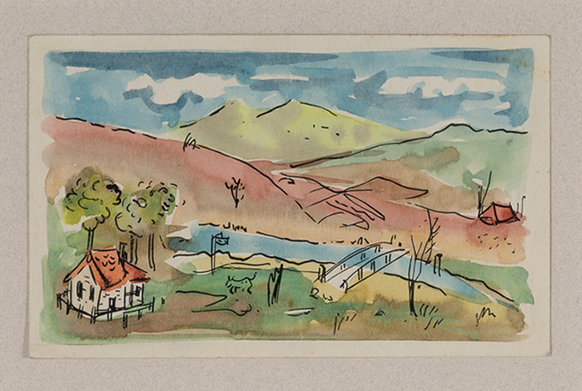
Hitler in the water
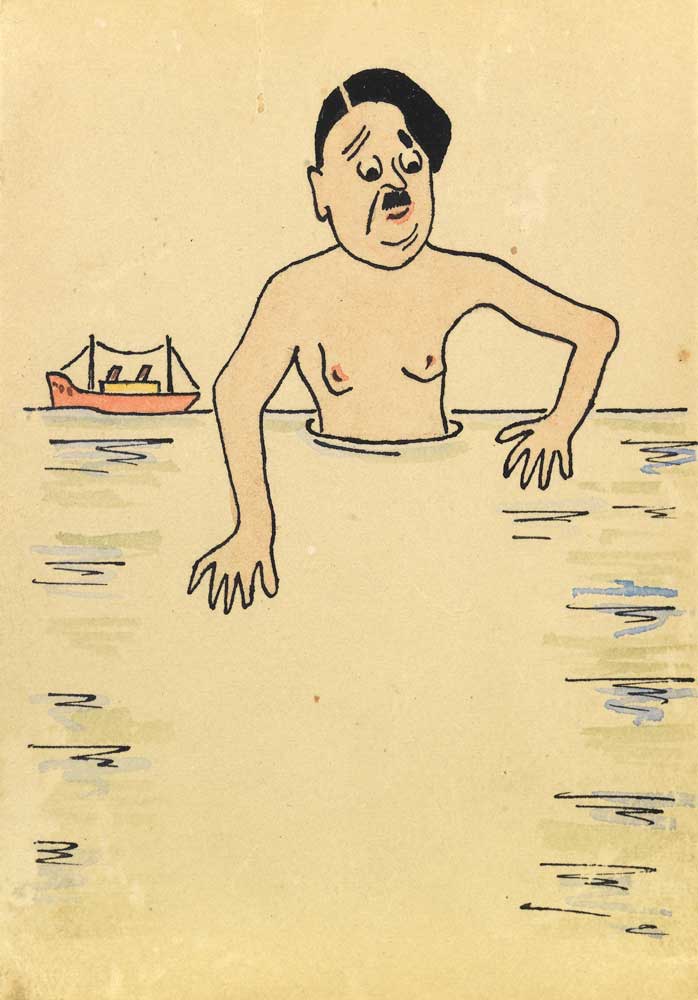
This drawing, which appears rather mundane when viewed under normal lighting, shows a much different scene when back lit.
This drawing, which appears rather mundane when viewed under normal lighting, shows a much different scene when back lit.
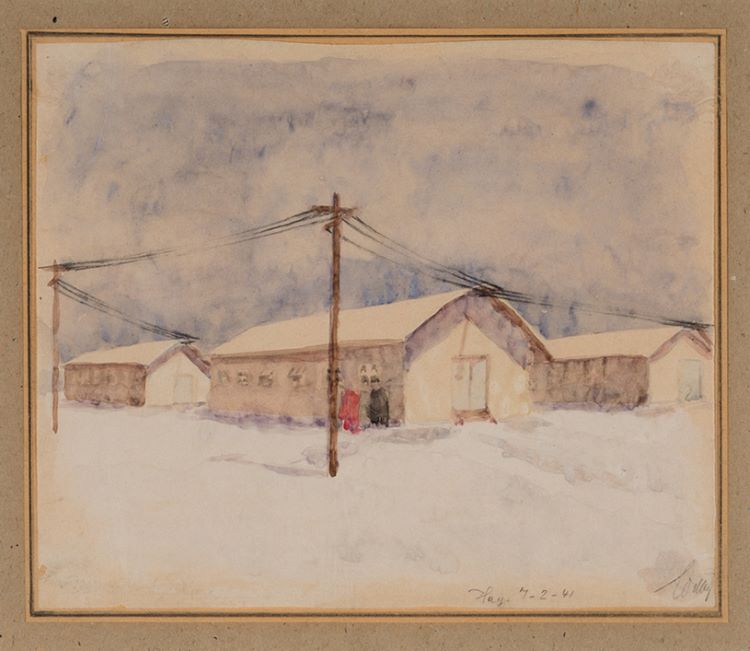
An untitled sketch of a hut in Hay, 7 February 1941. Though the pale colours make it look like the hut is surrounded by snow, this is likely an illusion: February is one of the hottest months of the year in Hay.

An untitled sketch of huts. Based on the date, this work was likely completed in Hay, NSW.

Emil Wittenberg was one of the most prolific Dunera artists.
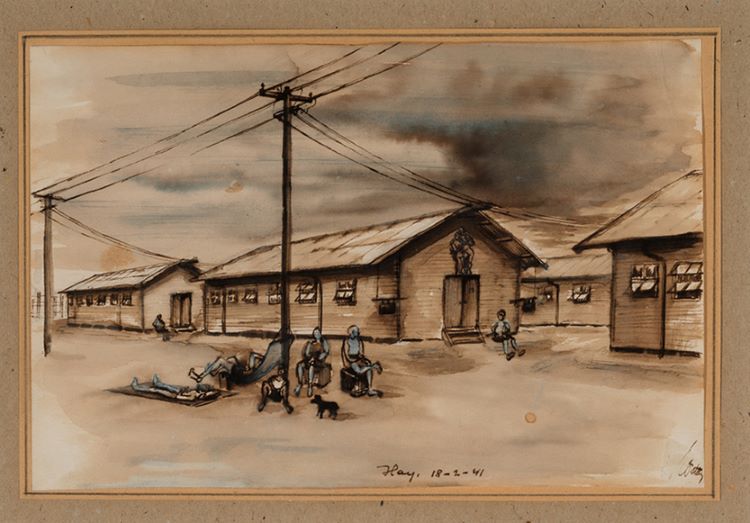
An untitled sketch of a hut in Hay, 18 February 1941. Men can be seen relaxing outside the hut.
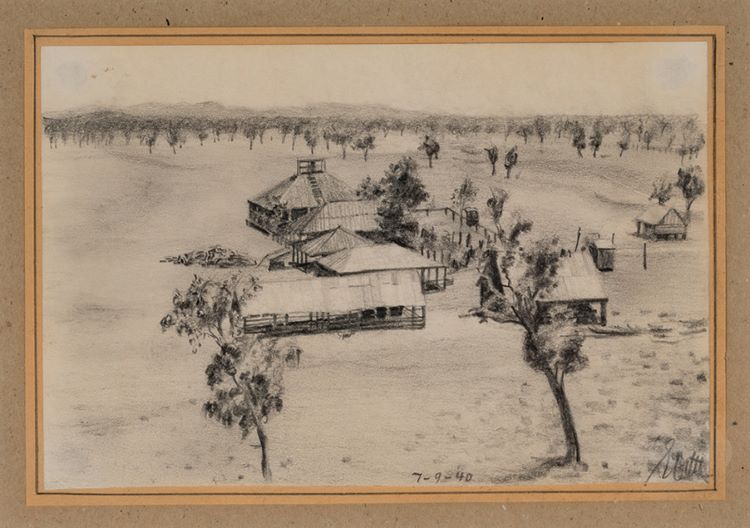
An unusual sketch of the camp from above. The date indicates that this work was completed on Emil Wittenberg's first day of internment in Hay, NSW.
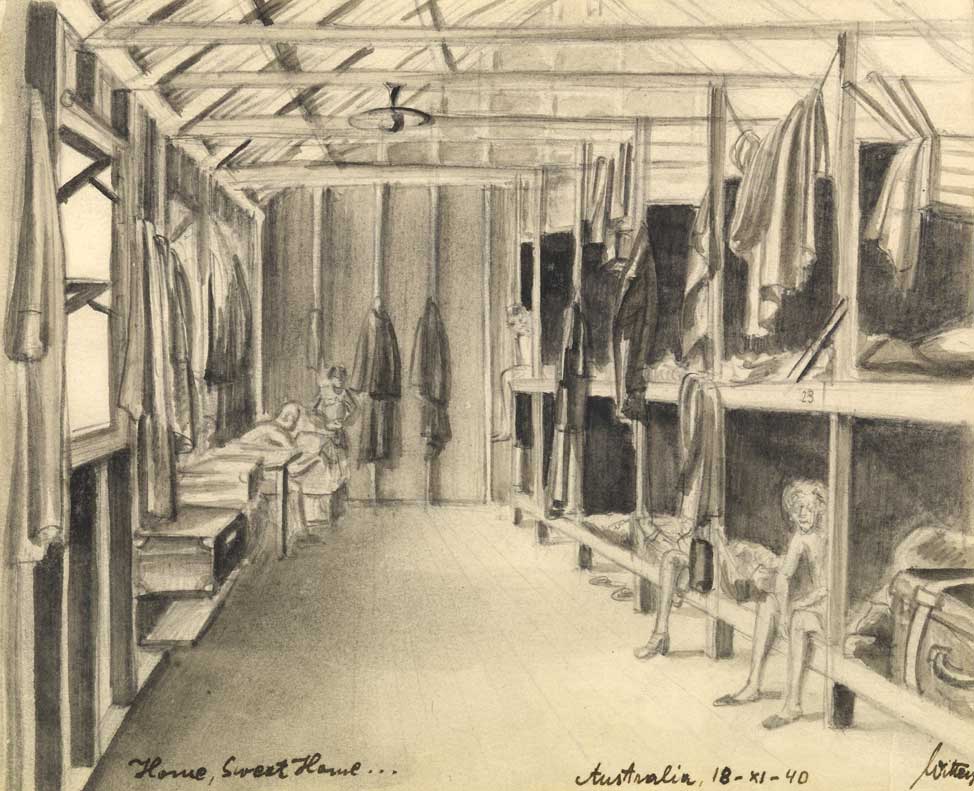
A sketch of the camp barracks. Based on the date, Wittenberg likely drew this in Hay.
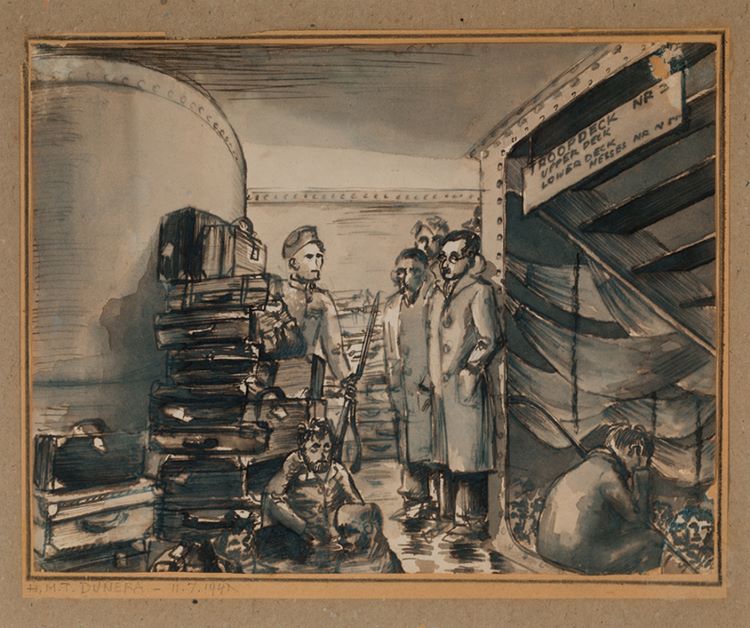
Sketches from aboard the Dunera are rare, which makes the date of this work ambiguous. On 11 July 1941, Emil would have been in Tatura, VIC. Is this piece a retrospective look at his experiences one year on, or a misdated work from 1940?
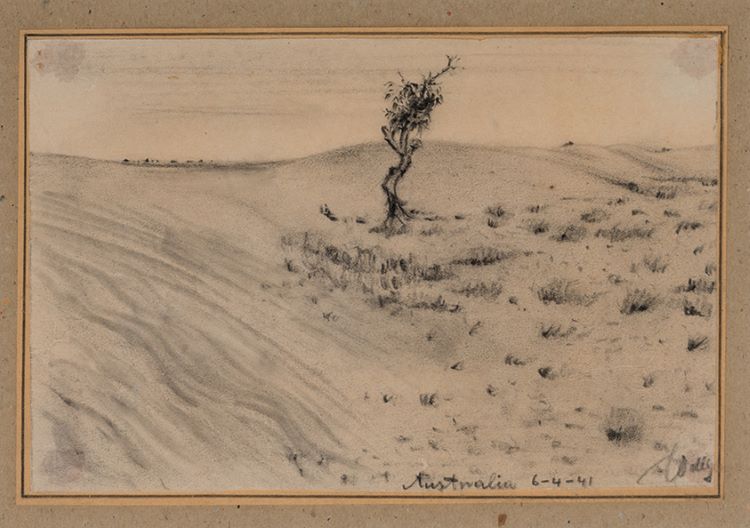
An untitled sketch of a lone tree, seemingly highlighting the flatness of Hay's landscape.
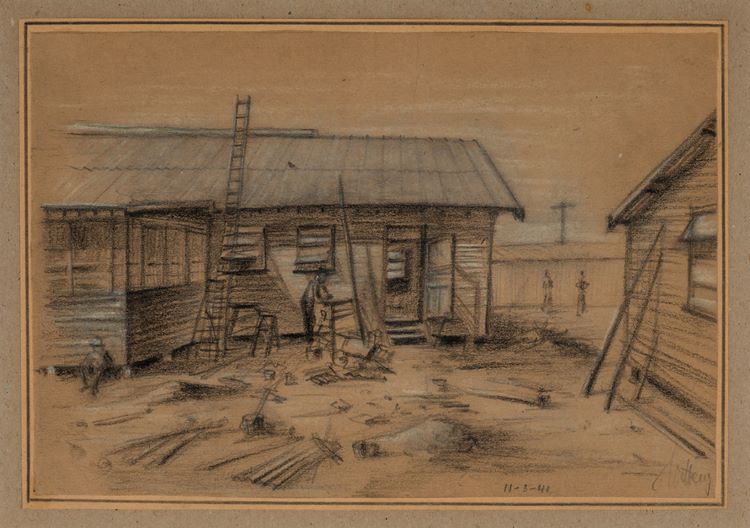
A sketch from 11 March 1941, which appears to show a hut being built. The date means the sketch would likely have been done in Hay, NSW.
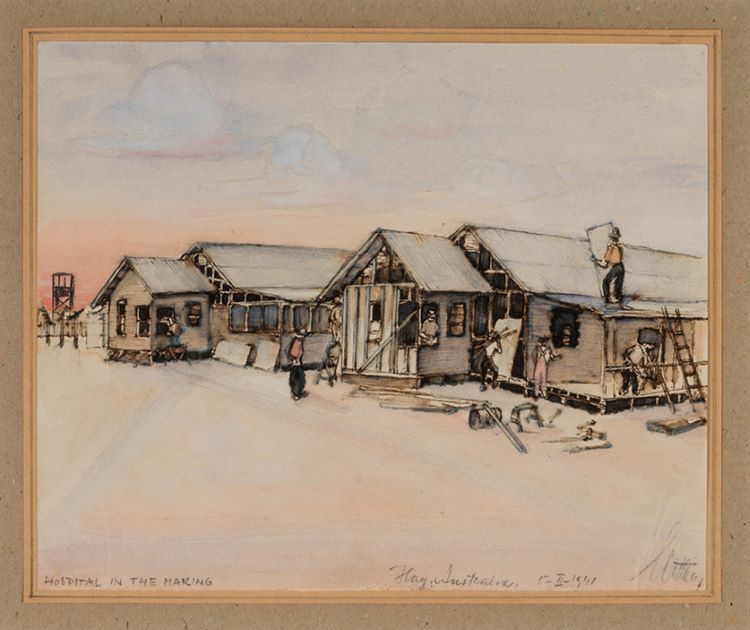
A sketch depicting a hospital being constructed in Hay, Australia, 5 February 1941.
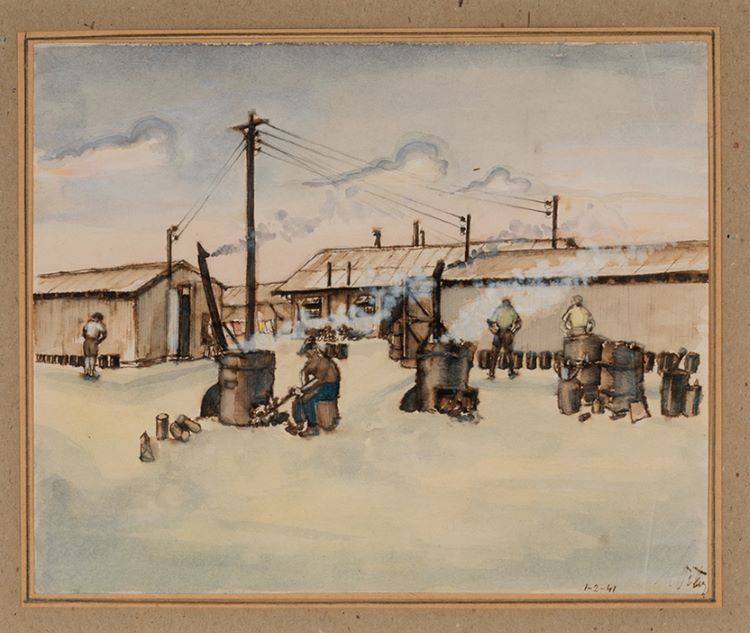
An untitled sketch of men tending to fires outside huts. This drawing was completed in Hay, NSW.
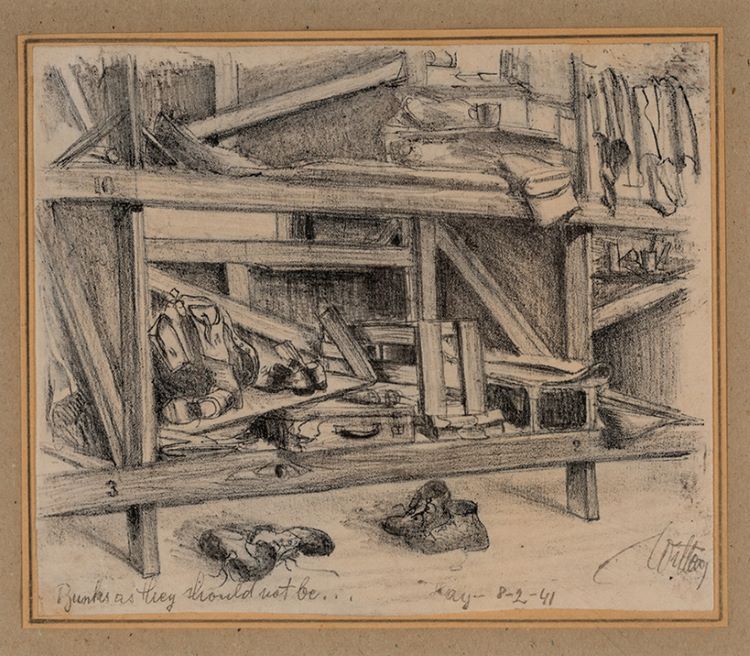
A sketch of the bunks in Hay, 8 February 1941.
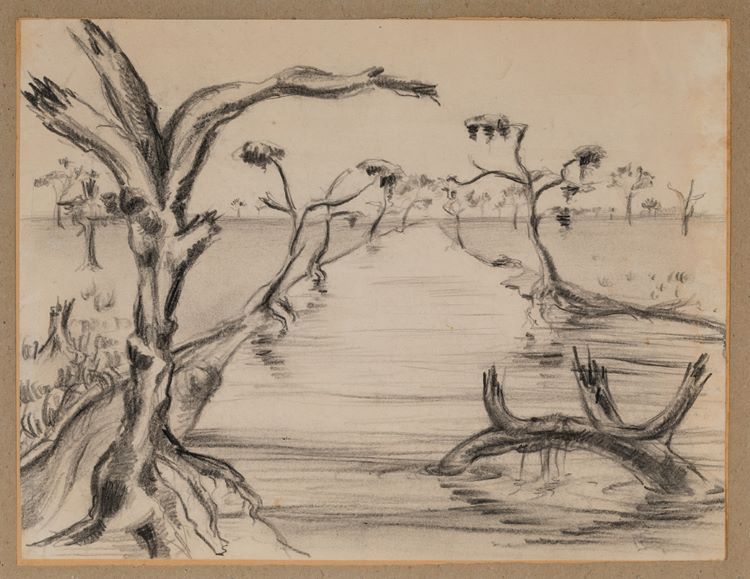
Reminiscent of Emil Wittenberg's railroad drawing, this untitled sketch depicts a long, straight river stretching off across a sparse plain, before disappearing from view in the distance.
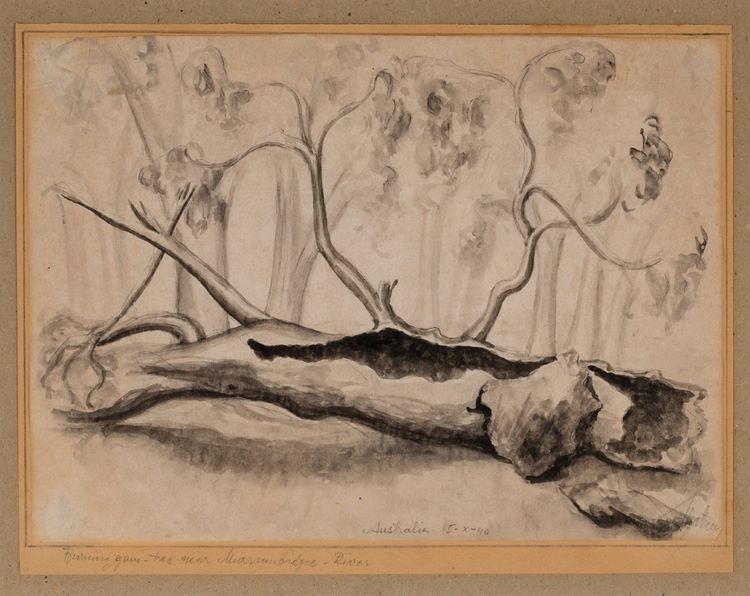
A sketch of a gum tree completed in Hay, 15 October 1940.
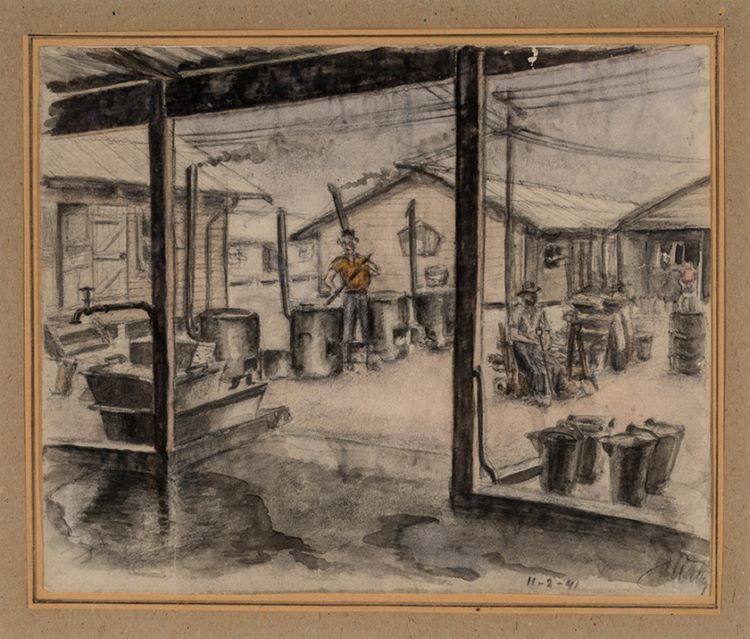
An untitled sketch looking out into the camp from the confines of a hut.
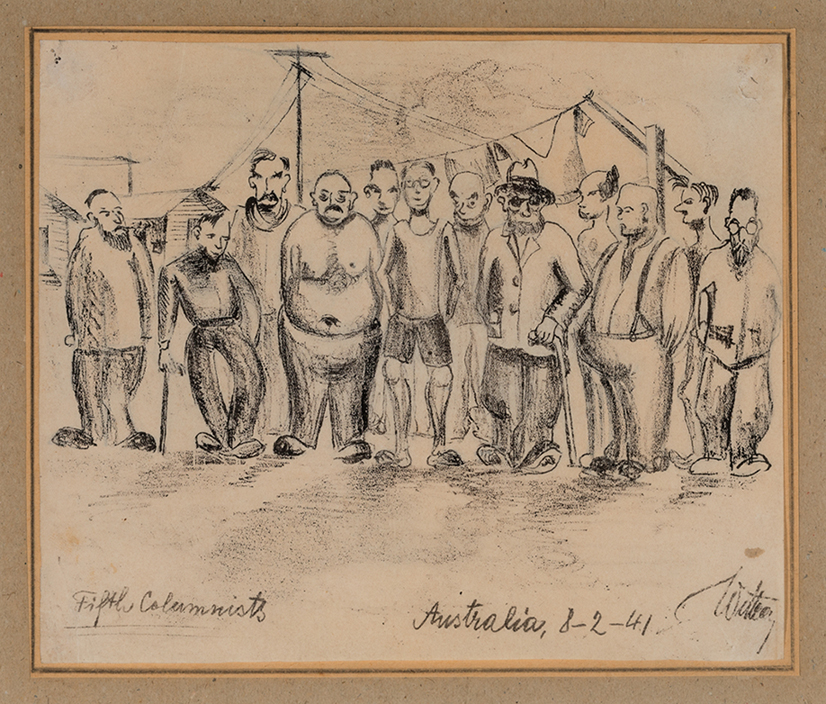
The title 'Fifth Columnists' is likely tongue-in-cheek: even in Emil Wittenberg's sketch, the men carry walking sticks, wear glasses - and do not appear 'Fifth Column' material.